Guitar Stencil: A Designer’s Real-World Embroidery Review
As a designer who’s stitched hundreds of custom pieces—from boutique baby onesies to limited-run band merch—I opened the Guitar Stencil files expecting something clean and versatile. What I found was a confident, mid-weight graphic that lands somewhere between playful and polished—ideal for craft businesses that want personality without sacrificing professionalism.
First Impressions: Mood, Shape, and Stitch-Ready Clarity
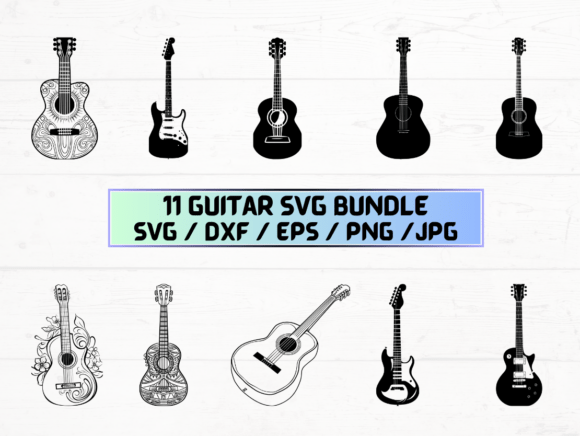
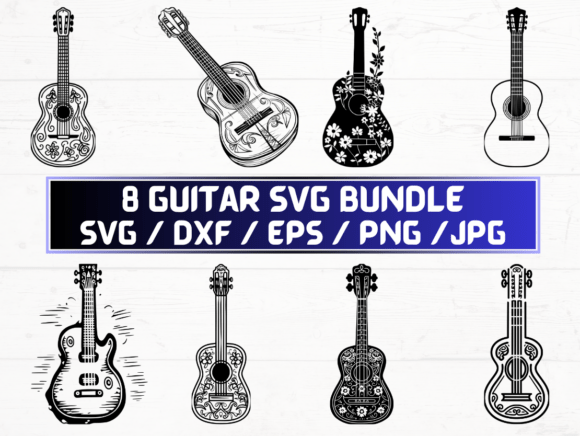
The Guitar Stencil immediately reads as *hand-drawn but intentional*—not overly detailed, not cartoonish, not minimalist to the point of ambiguity. It’s got subtle contour lines, balanced negative space, and a slight asymmetry in the body curve that gives it warmth. That matters: too-perfect vector shapes often look flat when translated to thread, but this one carries visual weight even before you load it into your machine embroidery software.
I tested it as a 3.5" wide design on a medium-weight cotton twill tote bag—exactly the kind I stock for local makers’ markets. The outline held up beautifully in satin stitch, and the open areas (like the soundhole and fretboard gaps) didn’t collapse or fill in unexpectedly. No dense fill stitch overload—just smart, breathable geometry. That’s rare in a generic “graphics” file set.
Where Guitar Stencil Shines (and Where It Needs Thought)
Best fits:
- Embroidered patch production—its clean edges and moderate detail translate cleanly to heat-seal or sew-on backing.
- Tote bag design and apron accents—especially when placed off-center or along a seam line for subtle branding.
- Sweatshirt embroidery on crewnecks or hoodies—works well at 4–5" wide without needing aggressive underlay.
- Baby embroidery on onesies or bibs (scaled down to ~2.75")—the shape reads clearly even small, and avoids tiny interior details that snag or blur.
- Holiday embroidery and wedding gifts for music lovers—think linen tea towels, pillow covers, or custom guitar strap tags.
Use with care on:
- Stretchy fabric like jersey or ribbed knits—this isn’t an applique design, so stabilizer choice is non-negotiable. A light cutaway + topping combo kept puckering in check during my test on a soft cotton-blend sweatshirt.
- Dark fabric—the design’s mid-contrast line work means thread color choice becomes part of the storytelling. Navy + mustard yellow reads joyful; black + charcoal gray reads moody and refined.
- Curved surfaces like caps—scale it down to 2.25" max, and avoid placing near the bill seam where distortion creeps in.
- Thin fabric such as lightweight poplin or rayon—test stitch density first. My version ran at ~8,200 stitches, which felt comfortable on midweight fabrics but could telegraph on sheer layers without proper stabilizer.
What It Adds to Your Finished Product—Beyond the Thread
Here’s what stood out after stitching three real projects: Guitar Stencil doesn’t just decorate—it elevates perceived value. On a plain canvas apron, it read as intentional boutique branding—not clipart. On a personalized baby blanket, it felt like a quiet nod to the parent’s identity, not a generic “music theme.” That’s the difference between a machine embroidery design and a design asset that supports your brand voice.
For Etsy sellers and small shop owners, that subtlety builds trust. Customers don’t need to squint to “get” it—and they’re more likely to tag your shop in social posts because it photographs well, scales cleanly, and avoids dated tropes (no glitter notes, no neon gradients, no forced “rock on!” energy).
Practical Notes Every Embroidery Designer Should Check
Before adding Guitar Stencil to your next client file or digital product bundle, do these six things:
- Test on scrap fabric—not just the same fiber, but the same weight and finish you’ll use in production.
- Review stitch density in your embroidery software. If it’s over 12,000 stitches, consider simplifying interior lines or reducing fill coverage.
- Confirm hoop size compatibility. This isn’t a tiny monogram—it needs breathing room. Aim for at least a 4×4 hoop minimum.
- Inspect small corners and curves in your software preview. Look for any jagged transitions or unintended overlaps in the vector paths (SVG/EPS) before converting to .pes or .dst.
- Mock it up in black and white—then on both light and dark backgrounds. Does the shape hold its integrity? Does it still feel like a guitar—or just a blob with strings?
- Verify licensing for commercial embroidery and resale. Since this is listed under Graphics, confirm whether finished embroidered items can be sold—and whether digital redistribution (e.g., as part of a design pack) is permitted.
Final Thought: A Quiet Workhorse, Not a Flashy Gimmick
Guitar Stencil won’t shout. It won’t go viral on Pinterest for its novelty. But it will reliably support your craft business—whether you’re embroidering 10 holiday tea towels for a local café or building a cohesive line of musician-themed nursery decor. It’s the kind of digital embroidery file that earns repeat use because it respects your time, your machine, your fabric, and your customer’s eye.
If you sell personalized gifts, run a craft business, or curate small shop product lines with intention, this is less “just another stencil” and more a quietly capable tool—one that makes your handmade product feel considered, not copied.