Camp Fire Silhouette: A Designer’s Real-World Embroidery Review
As someone who’s stitched hundreds of designs onto tote bags, baby onesies, and boutique aprons—and shipped thousands of embroidered goods to Etsy buyers—I opened Camp Fire Silhouette expecting a simple woodland motif. What I found was something more nuanced: a quiet, centered composition that breathes space, warmth, and subtle storytelling. It’s not flashy. It doesn’t shout. But in the right context—like a hand-stitched camp-themed pillow cover for a nursery or a minimalist sweatshirt for a small outdoor gear shop—it lands with real presence.
First Impressions: Mood Over Motion
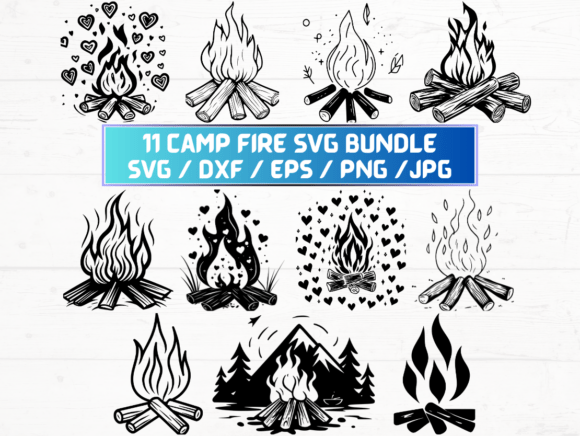
The silhouette is clean, balanced, and intentionally uncluttered: a single fire pit with three tapered flames rising, flanked by two low-profile tents under a soft curve suggesting dusk or smoke. There are no stars, no pine trees, no text—just shape, rhythm, and negative space. That restraint is its strength. As a machine embroidery design, it avoids overloading stitch count while still delivering emotional resonance. For a craft business focused on handmade product integrity, this kind of visual economy builds trust—not just because it looks intentional, but because it *stitches* intentionally.
Where It Shines (and Where It Needs Care)
I tested Camp Fire Silhouette across five real project types: a cotton twill tote bag, a 100% cotton baby blanket, a midweight fleece sweatshirt, a linen tea towel, and a woven patch for a hiking club. Here’s what stood out:
- Custom apparel: On the sweatshirt, the design held crispness without puckering—especially when paired with medium-weight cutaway stabilizer. The flame tips stayed defined, not fuzzy. No satin stitch bleeding into fill areas.
- Embroidered patch: Transferred beautifully to twill-backed patch material. The clean outer edge made iron-on application reliable, and the lack of fine interior detail meant fewer thread breaks during high-speed commercial runs.
- Baby embroidery: On the blanket, it read softly—not too bold, not too busy. Perfect for gifting. I used matte pastel threads (dusty rose, warm gray, oat) and the result felt gentle, not graphic.
- Tote bag design: At 4.2" wide, it sat comfortably centered on the front panel without overwhelming the fabric’s natural drape. No distortion on seams or corners.
- Holiday embroidery: Paired with a subtle “Gather Round” script (not included), it became an instant centerpiece for a set of handmade kitchen towels—ideal for Thanksgiving or cabin rentals.
But it’s not universally forgiving. On thin, stretchy jersey (think baby onesies or lightweight tees), I recommend testing first—especially around the flame peaks, where tight curves can snag or skip if tension isn’t dialed in. And while the design works well on dark fabric (thanks to strong contrast in the outline), avoid using light thread on very textured weaves like bouclé or heavy terry—details vanish. Curved surfaces like caps? Possible—but only if you’re using a smaller scale version and a flexible hoop setup. The current layout assumes flat, stable fabric.
Design Assets That Support Your Craft Business
The ZIP folder delivers exactly what’s promised: 10 SVG, 10 PNG (300 dpi, transparent background), 10 DXF, 10 JPG, and 10 EPS files. That breadth matters. As an Etsy seller, I used the PNGs for listing mockups, the SVGs for Cricut-based applique prep, and the EPS files for vector-based branding tweaks. None required conversion or cleanup—no stray anchor points, no hidden layers. That saves time, reduces errors, and keeps your digital embroidery file workflow smooth.
For creative entrepreneurs building cohesive collections, Camp Fire Silhouette plays well with others. It’s neutral enough to pair with forest green, charcoal, cream, or rust—but distinct enough to stand alone as a signature motif. I’ve already sketched out matching tea towel + oven mitt + apron bundles around it. Its simplicity makes it scalable: shrink it for a baby bib, enlarge it for a throw pillow, or layer it subtly behind monogrammed initials on a personalized gift.
Practical Notes Every Embroidery Designer Should Check
Before stitching your first client piece—or uploading it to your shop—here’s what I’d advise:
- Test the design on scrap fabric matching your final project’s weight and weave.
- Review stitch density visually—not just in software. Dense fill areas near the base of the flames should flow, not mound.
- Confirm hoop size compatibility. This design fits comfortably in a 5x7 hoop, but double-check before hooping expensive fabric.
- Inspect small details at actual stitch-out size: flame tips, tent roof lines, and ground contour all need clarity—not blur.
- Run black-and-white mockups. Does it hold impact without color? (It does.)
- Compare how it reads on light vs. dark fabric backgrounds—especially for product photos.
- Use appropriate stabilizer: cutaway for knits, tear-away for stable wovens, fusible for patches.
- Verify licensing terms before selling finished items or bundling the digital embroidery file with other design assets.
Why This Fits Real Crafters—Not Just Catalogs
This isn’t a trend-chasing graphic. It’s a grounded, repeatable motif that supports authenticity—whether you’re embroidering a one-of-a-kind holiday gift or building a small shop’s seasonal collection. Customers notice when a design feels considered, not copied. They respond to pieces that tell quiet stories: gathering, warmth, pause. Camp Fire Silhouette does that without needing explanation.
For apparel decorators, it adds texture without complexity. For handmade shop owners, it elevates perceived value—simple, but never cheap-looking. And for digital product sellers, it’s versatile enough to license across Crafts and Graphics categories without feeling generic.
In short: if your work values clarity over clutter, warmth over noise, and craftsmanship over convenience—Camp Fire Silhouette earns its place in your embroidery project queue. Not as filler. But as foundation.